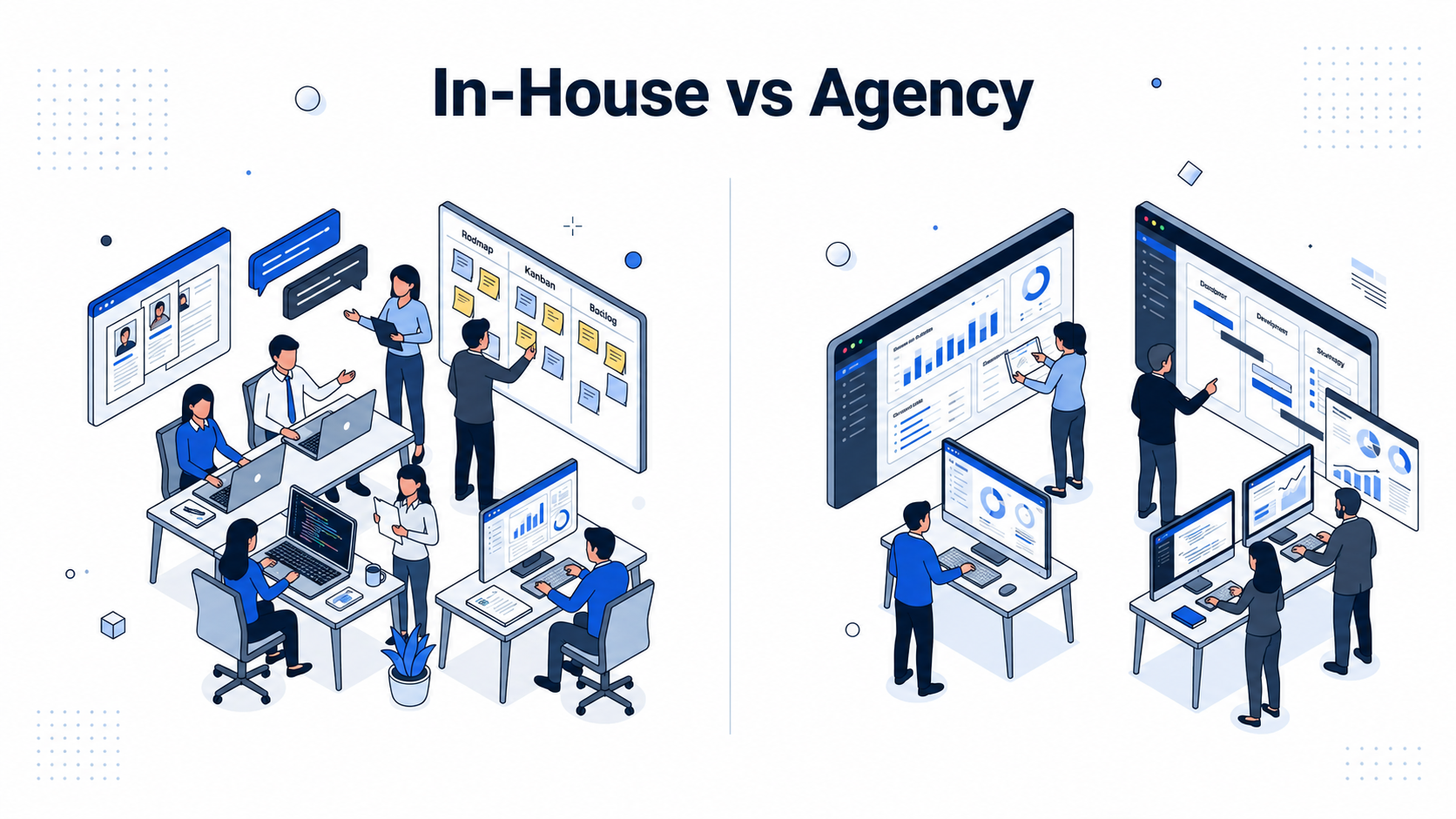





There's a moment every SaaS marketing team knows well. You have a campaign going live in three days. You need a new landing page. You brief the developer. The developer says they'll get to it next sprint. The sprint is two weeks away.
So you either delay the campaign, ship something half-built, or spend three days learning to hack together something in a tool that was never meant for this.
This is the moment that's driving thousands of SaaS companies to Webflow. Not because Webflow is trendy. Because the old way of building and managing a marketing website has a structural problem that no amount of good intentions fixes, and Webflow is the first tool that actually solves it without creating a different set of problems in return.
What Is Webflow Development?
Webflow development is the process of designing, building, and managing websites using Webflow, a visual web development platform that generates clean, production-ready code in the background as you build. Think of it as the middle ground between a drag-and-drop website builder (like Squarespace) and a fully custom-coded site. You get the flexibility and quality of custom development without every change needing a developer to implement it.
The key distinction is that Webflow isn't a template tool. A trained Webflow developer builds exactly what your brand needs, pixel by pixel, interaction by interaction. Once it's built, your marketing team can update copy, swap images, publish blog posts, and launch new pages without touching a line of code. That combination is what makes it genuinely different from anything else on the market right now.
The Problem With How Most SaaS Teams Built Websites Before
To understand why SaaS companies are switching, you have to understand what they're switching from.
Most SaaS marketing websites were built on WordPress. WordPress is powerful, it's flexible, and it has a plugin for everything. It's also a CMS that was built for bloggers in 2003 and has been retrofitted for everything else since. The result is a system that requires constant maintenance, breaks when plugins conflict, needs a developer for anything structural, and carries security vulnerabilities that have to be patched on an ongoing basis.
The other common path was fully custom-coded websites built on Next.js or similar frameworks. These look great and perform even better, but they put your entire marketing site inside the engineering team's codebase. Every headline change, every new landing page, every A/B test becomes an engineering ticket. Marketing velocity grinds to a halt because the team responsible for revenue growth is waiting in a queue behind product priorities.
Both paths have the same underlying problem: marketing doesn't own the website. Someone else does. And in a world where speed is a competitive advantage, that dependency is expensive.
Why Webflow Specifically Solves This
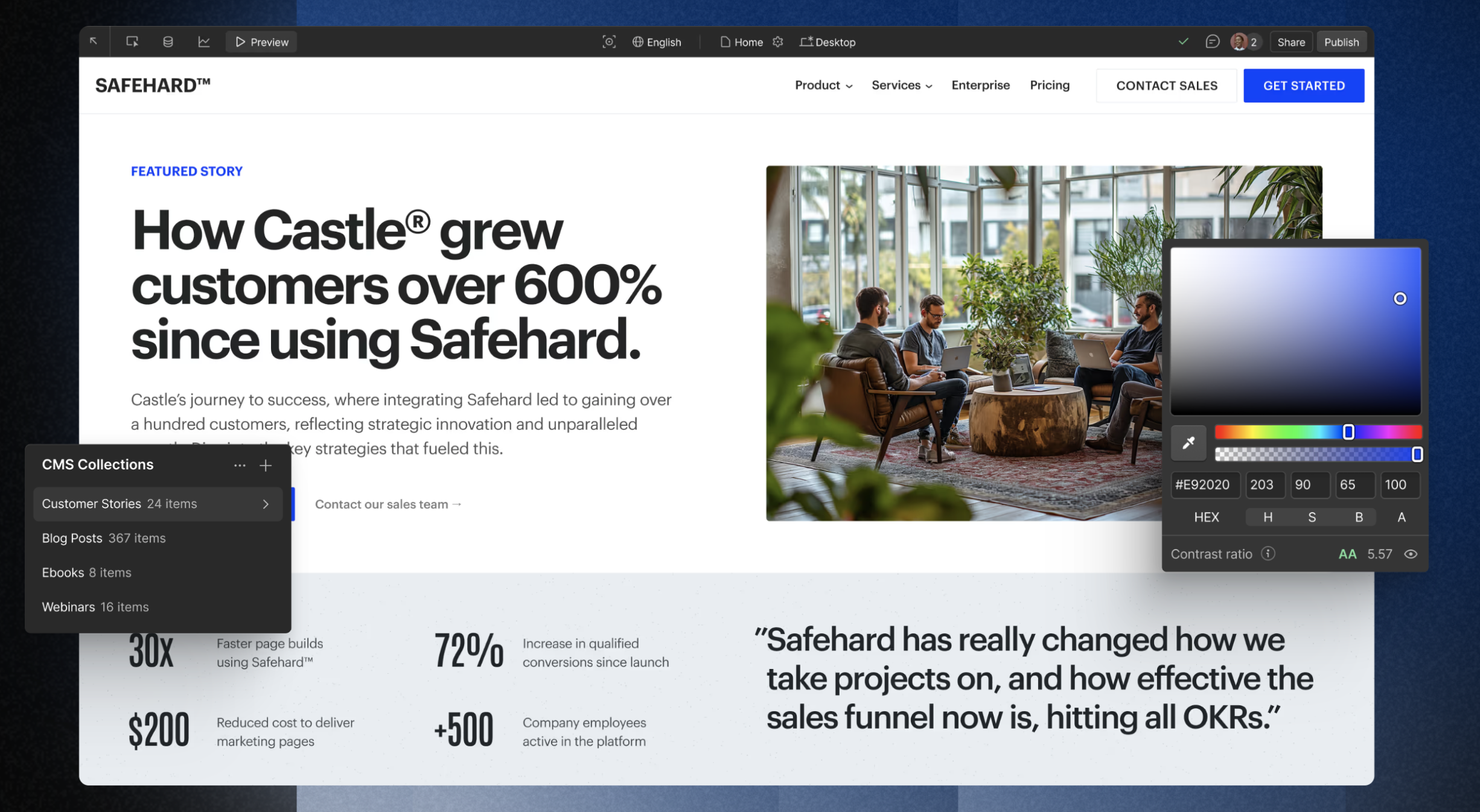
Webflow flips the ownership model. Design and development happen once, by a specialist Webflow development team. After that, marketing owns the site. They can update it, expand it, and iterate on it without filing a single ticket.
Here's what that looks like in practice. Hotjar, the user behaviour analytics tool, rebuilt their marketing site on Webflow specifically to give their marketing team more autonomy. Instead of going through engineering for every content update, their marketing team could ship changes in hours. That speed matters when you're running paid campaigns, testing messaging, or reacting to a competitor move.
Vercel, the deployment platform, is another example. Their website is a masterclass in what Webflow development enables: fast load times, clean animations, and a design system that scales as the company grows, all without the marketing team being blocked by the engineering roadmap.

The pattern holds across dozens of post-PMF SaaS companies. When you look at the websites of Linear, Loom, Raycast, and similar products, you see a level of design quality and page speed that most WordPress sites simply can't match. Most of them were built or rebuilt on Webflow.
What Actually Changes When You Switch to Webflow
The most immediate change is speed. Not just page load speed, though Webflow sites do perform well on Core Web Vitals by default. The bigger speed gain is how fast your team can move.
When a marketing team owns their website, a landing page that used to take two weeks to ship takes two days. An A/B test that used to require an engineering resource can be set up in an afternoon. A blog post that used to go through a publishing workflow with three approval steps can be live in an hour.
The second change is design quality. Webflow gives designers full creative control without constraints. There are no themes to fight against, no plugin styling to override, and no template grid forcing your layout into a shape it doesn't want to be in. This is why Webflow sites tend to look significantly better than the average WordPress site. The design is built from scratch, for your brand, with no compromises.
The third change is maintenance. A WordPress site running fifteen plugins needs someone paying attention to it constantly. Security updates, plugin conflicts, database slowdowns. It's a low-grade background cost that most companies don't even fully account for. Webflow handles hosting, security, and performance infrastructure. Your team stops managing a server and starts managing a brand.
When Webflow Development Makes the Most Sense
Webflow isn't the right answer for every company at every stage. It's worth being honest about where it fits best.
The clearest use case is a B2B SaaS company in the Seed to Series B range that has a marketing team of one to five people, a product that's past early validation, and a website that needs to work harder than it currently does. At this stage, the cost of slow website iteration is real. Campaigns are running, messaging is still being refined, and the sales cycle depends on the website doing its job between touchpoints.
It's also the right fit when design quality is a competitive signal. In crowded SaaS categories, the best product doesn't always win. The product that looks most credible, most polished, and most trustworthy at first glance has an advantage in the buying process. Webflow development done well produces websites that clear that bar consistently.
Where Webflow is less suited: highly complex web applications where the marketing site and the product are deeply integrated, or very early-stage companies with no design resources, where a simple no-code tool might be enough to get to the next milestone.
What to Look for in a Webflow Development Agency
Not everyone who builds in Webflow builds it well. The tool gives you the capability to create anything, which means it also gives you the capability to build something that looks good in the editor and falls apart in production.
A strong Webflow development agency starts with strategy, not design. They ask who the site is for, what it needs to say, and what it needs to do before they open a single canvas. They understand conversion, not just craft. A beautiful website that doesn't generate leads isn't a success. And they build for handoff, meaning your team can actually use the site after launch without needing the agency on standby for every update.
The other thing to look for is whether the agency understands B2B specifically. Consumer websites and B2B SaaS websites have different jobs. B2B buyers take longer to decide, involve more people, and need more proof before they act. A Webflow development agency that specialises in B2B knows how to structure the site to support that buying journey, not just make it look good.
The Real Reason SaaS Companies Are Making the Switch
When you talk to SaaS founders and marketing leads who've moved to Webflow, the reason they give isn't usually "we wanted better design" or "we wanted faster load times." It's something simpler: they were tired of their website being a bottleneck.
Their product was moving fast. Their team was moving fast. And every time they needed the website to do something, it slowed everything down. The website was the one part of their go-to-market motion they didn't control, and that loss of control had a real cost in delayed campaigns, inconsistent messaging, and missed opportunities.
Webflow doesn't just solve a technical problem. It solves an organisational one. It puts the right people in control of the right assets, and it removes a dependency that quietly drains speed and momentum from marketing teams that should be focused on growth.
That's the switch. And once you've made it, it's very hard to go back.
Ready to Move Your SaaS Website to Webflow?
If your marketing team is still filing tickets to change a headline or waiting three weeks for a landing page, the cost isn't just time. It's campaigns that don't launch, messaging that doesn't get tested, and a website that stays out of date while your product keeps improving.
Webflow development done right gives you a site that performs, a brand that looks the part, and a team that can finally move at the pace your growth requires.
Minute Creative builds Webflow websites for B2B SaaS companies. We handle strategy, design, development, and SEO so you launch with a site that's built to convert, not just to look good. Book a free strategy call and let's talk about what your website should be doing for your pipeline.

.png)