.png)





Picture this. You're on your homepage, staring at the headline your team wrote three months ago, and it says something like "The all-in-one platform for modern teams." Sounds fine. Says nothing. If a visitor read that sentence and closed the tab five seconds later, you wouldn't even know why.
This is usually the exact moment a founder starts Googling "unique value proposition SaaS", trying to figure out why the words on their own website aren't landing.
Quick answer first: a unique value proposition, usually shortened to UVP, is one clear sentence that tells a specific type of customer why your product is the right choice for their specific problem, better than the other options they're already considering. It's not a slogan. It's not a mission statement.
It's the answer to the one question every visitor is silently asking the moment they land on your site: "Why you, and why now?"
Let's actually build out what that means and how to get there.
What exactly is a UVP, and why isn't a tagline the same thing?
Here's where a lot of founders get tripped up. A tagline is short and catchy, meant to be memorable. A UVP is meant to be true and specific, even if it's not especially catchy. You can have both, but they do different jobs.
A weak UVP sounds like this: "The smartest way to manage your business." It's vague enough to apply to almost any SaaS product, which means it applies to none of them in the visitor's mind.
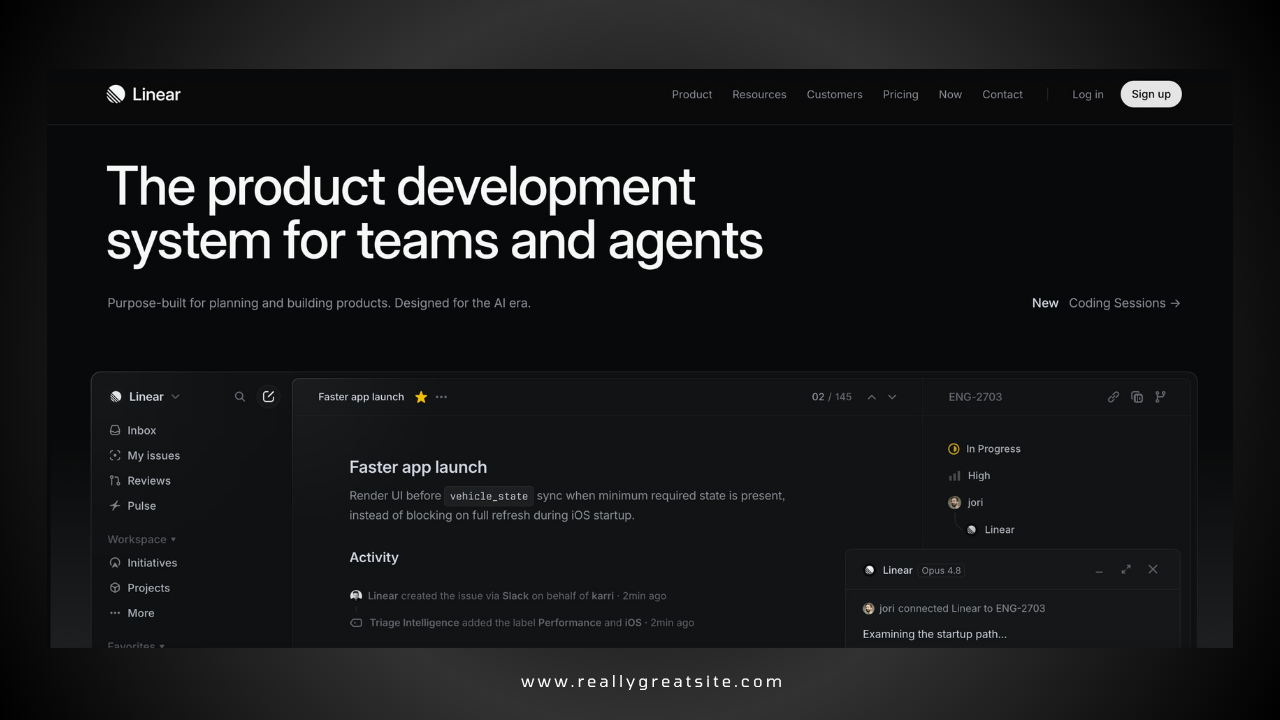
A strong UVP sounds more like this: Linear positions itself, in effect, as the issue tracker built for software teams that actually want to use it, a direct jab at how clunky most project management tools feel to engineers. That's specific. That names a real frustration (clunky tools) and a real audience (software teams), and it's instantly clear who this product is and isn't for.
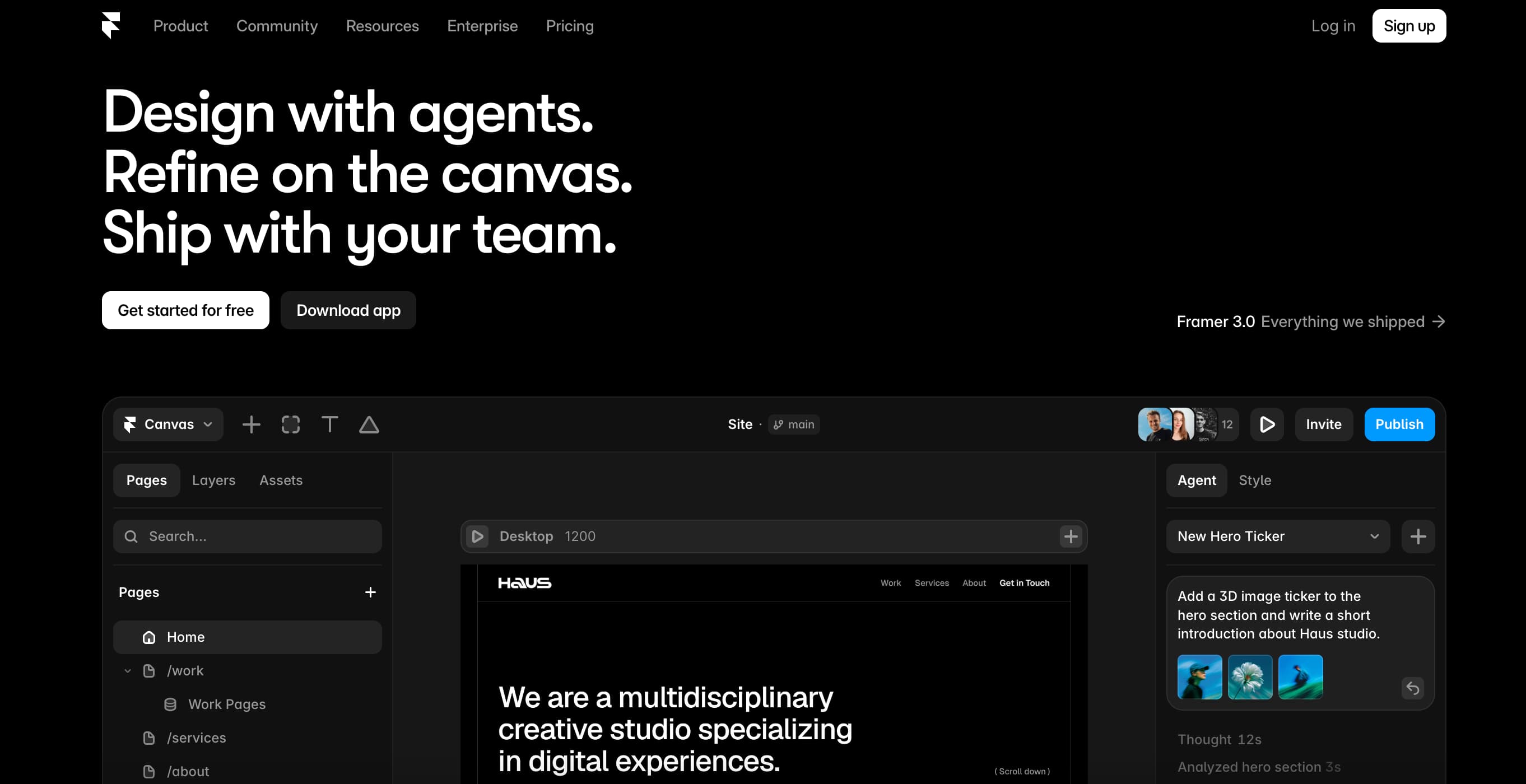
Framer does this well. Instead of saying something broad like "build any website", it leans into "Design with agents. Refine on the canvas. Ship with your team", which still points at a specific kind of user (someone who cares about design and agents) rather than trying to appeal to anyone who needs a website.
Why does having a sharp UVP matter more for SaaS than for other kinds of businesses?
Because SaaS buyers do something most other customers don't: they compare. According to ChartMogul's SaaS data, most B2B software buyers research multiple tools side by side before committing, often over weeks, sometimes involving several people on their team weighing in before a purchase happens. That means your UVP isn't competing against silence; it's competing against three or four other tabs open in the same buyer's browser, each one making its own pitch.
If your UVP is vague, you're not losing to a better product. You're losing to whichever competitor said something clearer.
How do you actually build a UVP instead of just guessing at one?
This is the part that trips founders up the most, because a lot of teams try to write the UVP first, as a copywriting exercise. That's backwards. A UVP is the output of a decision, not the start of one. Here's the order that actually works.
Step one: build your ICP. An ICP, short for ideal customer profile, is a detailed description of the exact type of company or user who benefits most from your product – not "everyone" or "small businesses", but something specific like "Series A B2B SaaS companies with a founder-led sales team and no dedicated content hire yet". Without a real ICP, your UVP has no audience to aim at, so it ends up vague by default.
Step two: figure out what you are not. This sounds strange, but naming who you're not for is often what makes a UVP sharp. If your product is genuinely built for fast-growing SaaS teams and genuinely wrong for solo freelancers, saying that out loud (even just internally) forces the language to get specific instead of trying to appeal to everyone at once.
Step three: name the real alternative your buyer is comparing you against. Not a generic "the competition", but the actual tool, spreadsheet, or manual process your ICP is using today. A UVP that responds directly to that alternative lands harder than one written in a vacuum.
Step four: write the sentence, then cut every word that could apply to a competitor too. If a rival could copy-paste your UVP onto their own homepage and it would still technically be true, it's not specific enough yet.
HubSpot is a good example of this in practice. It didn't try to be Salesforce for everyone. It built its early positioning specifically around small- and mid-sized teams who found Salesforce too complex and expensive, and that decision about who it wasn't for shaped the UVP just as much as who it was for.

UVP vs positioning vs messaging: aren't these all the same things?
Not quite, and mixing them up is one of the most common mistakes SaaS founders make. Here's the simplest way to tell them apart.
Positioning comes first, as a decision. The UVP is the sentence that decision produces. Messaging is everything built on top of that sentence afterwards. Skip the first step, and the UVP ends up being a guess dressed up as copywriting.
What are signs your current UVP isn't working?
A few honest signals worth checking against your own homepage right now.
- A competitor could put your exact headline on their own site, and it would still be accurate.
- Prospects ask, "So what does this actually do differently?” on sales calls after already reading your website.
- Your team gives three different one-line answers when asked what the company does.
- The UVP describes a feature ("all-in-one platform") instead of an outcome or a specific audience.
- Conversion rates on your homepage have stayed flat even as traffic has grown.
The real problem behind the "unique value proposition saas" search
Here's what usually happens next, once a founder realises their UVP is weak. They rewrite the headline. Maybe they A/B test three or four versions. And sometimes conversion nudges up a little, but not much, because the sentence was never really the problem. The positioning decision underneath it, who this is for and why it beats the alternative, was never actually made. No amount of headline tweaking fixes an unmade decision.
This is exactly where Minute Creative starts. Instead of jumping to copywriting, the process begins with the strategic decision (an ICP built alongside an "anti-ICP", naming exactly who this isn't for) and then builds the UVP and full messaging architecture on top of that foundation. If your homepage headline has been rewritten five times and still isn't converting, that's usually the real gap. Book a call today to fix that gap.
.jpg)
