.png)





Your homepage has been live for months. People are visiting. But they're not buying.
You hire a copywriter. New words go up. Still nothing changes.
Here's the uncomfortable truth: the writing was never the problem. The problem was what was underneath the writing. Your positioning was broken, and no amount of clever copy can fix that.
This guide explains what SaaS positioning actually is, why most early-stage companies get it wrong, and how to build a positioning strategy that makes the right buyers say, "This is exactly what I was looking for."
What Is SaaS Positioning Strategy?
SaaS positioning strategy is the decision a company makes about three things: who it serves, what problem it solves, and why buyers should pick it over every other option.
Think of it as the foundation your entire website, sales pitch, and marketing sit on. If the foundation is shaky, everything built on top of it wobbles too.
Here is a quick test: Ask two people who just visited your homepage what your product does. If they give you two different answers, your positioning is broken. A positioning strategy is exactly what fixes that.
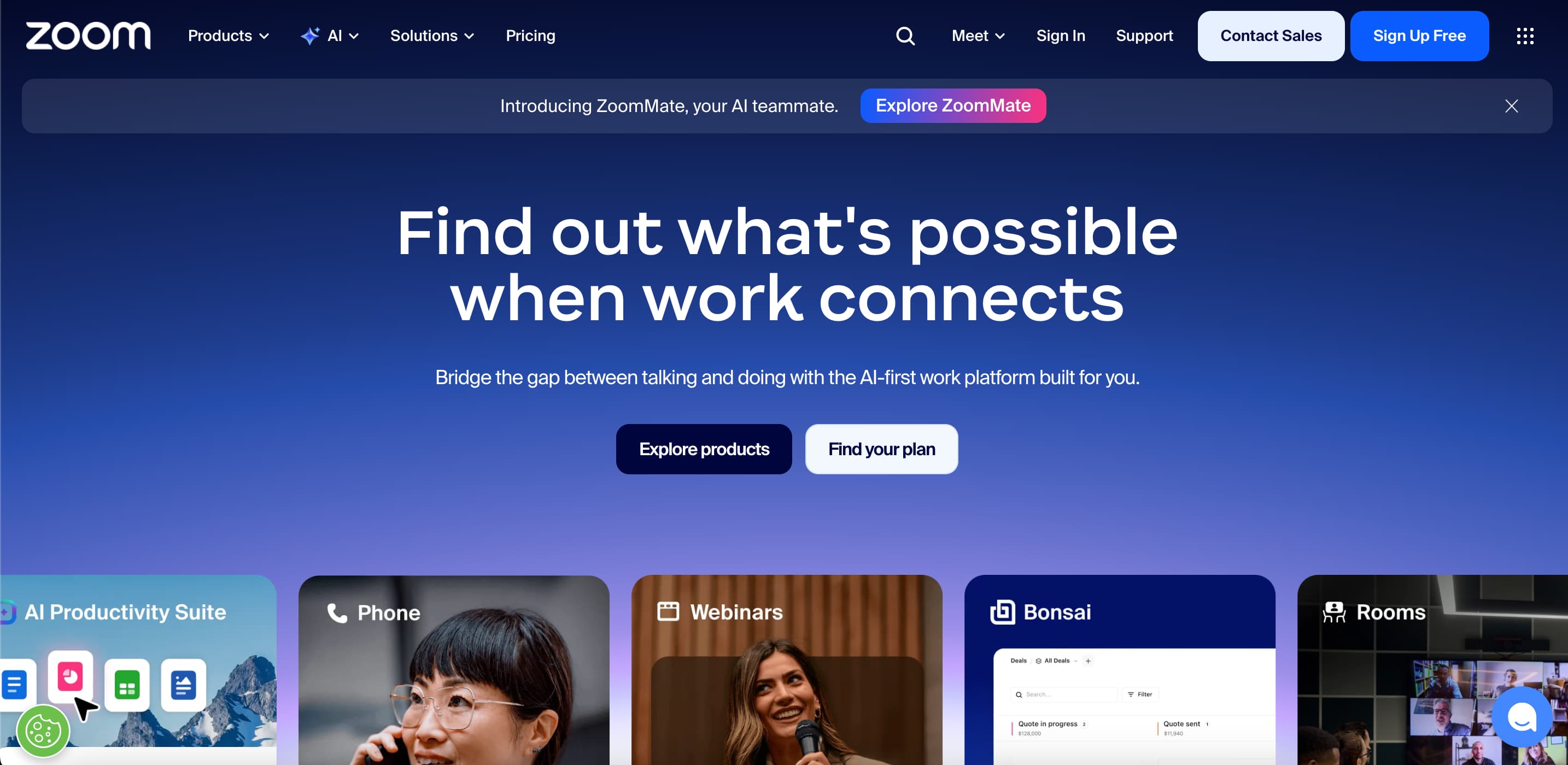
For example, take Zoom.
Before Zoom, video calls meant Skype freezing mid-sentence or spending 10 minutes getting WebEx to load. Both tools were built for IT teams, not people.
Zoom made one call: position around simplicity, not features. One click to join. No account needed. It just works.
Their positioning answered three things cleanly: who they serve (anyone who needs to meet), what problem they solve (meetings that don't work), and why pick them (the easiest experience in the category).
The result? "Let's Zoom" became a verb. That's what clear positioning does.
According to High Value's 2024 SaaS Benchmarks Report, 76% of SaaS founders say go-to-market execution is their biggest challenge. Clear positioning helps reduce that challenge by making it easier for prospects to understand who your product is for and why they should care.
Why Do Most SaaS Companies Get Positioning Wrong?
Most founders treat positioning like a writing problem.
They look at the homepage, feel like something is off, and hire a copywriter to fix it. The new copy goes live. Nothing changes. They hire another copywriter. Still nothing.
The copy was fine both times. The positioning underneath it was not.
Here are the warning signs that your positioning is broken, not your copy:
- Your sales team describes the product differently than your website does.
- Your best customers use the product for something slightly different from what you built it for.
- You keep losing deals to a competitor you think you are nothing like.
- Prospects say "we need to think about it" without giving you a real reason.
These are positioning failures. Rewriting the copy treats the symptom. A positioning strategy treats the cause.
What Is the Difference Between Positioning, Brand Positioning, and Messaging?
These three terms get used like they mean the same thing. They do not. And mixing them up is one of the most expensive mistakes a SaaS founder can make.
Positioning strategy has to come first. Brand positioning builds on top of that. Messaging comes last. Most teams start at messaging and wonder why it does not convert. They skipped the two steps above it.
What Are the 5 Parts of a SaaS Positioning Framework?
A solid positioning strategy answers five questions. Not three, not four. All five.
1. Who is this for, specifically?
Not "B2B companies" or "growing startups". The more precise the description, the stronger the positioning.
Loom positioned itself specifically for distributed teams who needed to replace back-to-back meetings with short recorded videos. It did not say "anyone who communicates at work". It said, 'People who are drowning in meetings and need a faster way to get their point across.' That specificity is what made it spread inside companies rather than sitting unused.
Think of your single best customer: the one who loves the product, never complains, and refers others. Your positioning should describe more people like them, not a broader group.
2. What problem does this solve, in the customer's own words?
The way your customers describe their problem matters more than the way your product team describes it. If customers say, "We waste three hours a week pulling reports by hand," your positioning should reflect that reality, not the technical feature that eliminates it.
3. What category does this product belong to?
Category is a strategic choice. You can enter an existing category (easier to explain, harder to stand out) or define a new one (harder to explain, but much easier to own).
Figma entered the design tools category and then redefined it around collaboration. The existing category said design tools are for designers. Figma said design tools are for everyone on the product team. That single shift in category definition is what made Figma a platform instead of just another tool.
4. What makes this product different from every alternative?
Alternatives include direct competitors, indirect competitors, and doing nothing at all. Your difference needs to be real and not easy to copy overnight.
5. What is the proof?
Claims without evidence destroy trust. "Saved 3 hours a week" is far more convincing than "saves time". Use specific customer outcomes with numbers where possible, and pull from credible sources like OpenView, ChartMogul, or Gartner when you cite industry data.
.jpg)
Should You Create a New Category or Compete in an Existing One?
A "category" in SaaS is simply the type of product buyers think you are. "CRM tool." "Analytics platform." "Payroll software." Choosing which category to play in is one of the biggest strategic decisions you will make.
Rippling is a good example of category expansion. It entered the HR software category and then expanded the definition to include IT management, finance operations, and employee spend, all under one platform. That expansion let them command a premium price that a plain "HR tool" could never justify.
For Seed and Series A company's category entry with a sharp, differentiated position is almost always the faster path to revenue. Category creation is powerful but takes 18 to 36 months and a large marketing budget before it pays off.
How Do You Build a SaaS Positioning Strategy? A 6-Step Process
Step 1: Get clear on four basic questions first
Before you touch your website or sales deck, answer four questions about your own product. Sounds simple. Most founders can't do it cleanly.
What is it? Don't say "It helps teams be more productive." That tells people nothing. Say what it actually is. Either name the type of product it is, like "It's a CRM", or name the specific thing it does, like "It's a tool for scheduling meetings over email." Your buyer needs to get it in five seconds.
Who is it for? This follows from the first answer. If you named a product type, your buyer is someone already looking for that type of tool. If you named a specific job it does, your buyer is someone dealing with that exact problem right now.
What does it replace? Not just your direct competitors. Think about what your customer was doing before they found you. A spreadsheet. A manual process. Just living with the problem. Your product only looks useful compared to that.
Why is it actually better? This is where most founders get it wrong. They say "We're easier to use" or "Our support is better." Every competitor says the same thing. You need something clear and specific, a claim you can make that your competitors honestly cannot. DuckDuckGo says, "We don't track you." Google will never say that. That's the kind of difference that actually sticks.
Step 2: Pick one positioning type and stay with it
You have two options. Pick one, not both.
'Category-based' means you place your product in a known group and explain why yours is the better one. Figma said "collaborative interface design tool". People already knew what design tools were. Figma just added "collaborative" to show what made them different from everything else in that space.
'Use case-based' means you lead with the specific job your product does. Calendly couldn't say "scheduling software" because people would compare them to Google Calendar, which is a totally different thing. So they said, "A tool for scheduling meetings over email." That one line made everything clear.
Keep this in mind: the more specific your use case, the more it connects with the right person, but the fewer people you reach. The broader the category, the more people see it, but the less it hits home. Find the balance that fits where you are today.
Step 3: Find the person who actually says yes to the deal
The buyer who matters is the person who feels the pain and has enough say to get it approved. They're usually one level above the daily user. They're the one who sells it to their team, deals with finance, and pushes it through.
If your positioning speaks to the daily user but the manager is the one saying yes or no, your message will feel off in every sales call. Write for the person making the call.
Step 4: Go through your last 20 deals before you assume anything
This step alone saved us from a lot of bad guesses.
Look at your last 20 deals, the ones you won and the ones that walked away from you. For every win, ask: Who was this person? What problem were they trying to solve? What made them start looking? For every loss, ask: Who left? What did they pick instead? What reason did they give?
You will find things you did not expect. Maybe every win came from one specific type of company. Maybe every loss pointed to the same competitor. Maybe the reason people are actually buying from you has nothing to do with what you thought.
Most founders skip this and go with their gut. That's why their positioning keeps missing.
Step 5: Write a one-page positioning statement that stays internal
This is not a tagline. It does not go on the website. It is what your whole team agrees on before anyone writes anything that goes public.
It covers four things: who you are for, what problem you solve, what the customer would do without you, and why you are better in a way that actually matters to them.
When this exists and everyone is on the same page, writing the homepage is easier, the sales deck is easier, and bringing new people up to speed is faster. When it does not exist, everyone is writing from their own version of what the product is, and nothing lines up.
Step 6: Test it with five real customers before anything goes live
Before you publish anything, sit with five customers and ask two questions.
"Does this describe why you actually bought from us?"
"If a competitor said this exact thing, would you believe them?"
The first tells you if it is true. The second tells you if it is actually different. If they pause or seem unsure, keep working on it. If they say yes to both, you are ready.
You cannot test positioning by changing a headline and checking the numbers after a week. It takes months to see real results because it has to work through your whole sales process. But you can get early signs by pitching it in a live sales call and watching how the person on the other side reacts. That is the quickest honest feedback you will get.
What Does Brand Positioning Add, and When Does It Matter?
Brand positioning takes your strategic position and adds a layer on top. It answers a different question: not just what you want buyers to know about you, but how you want buyers to feel about you.
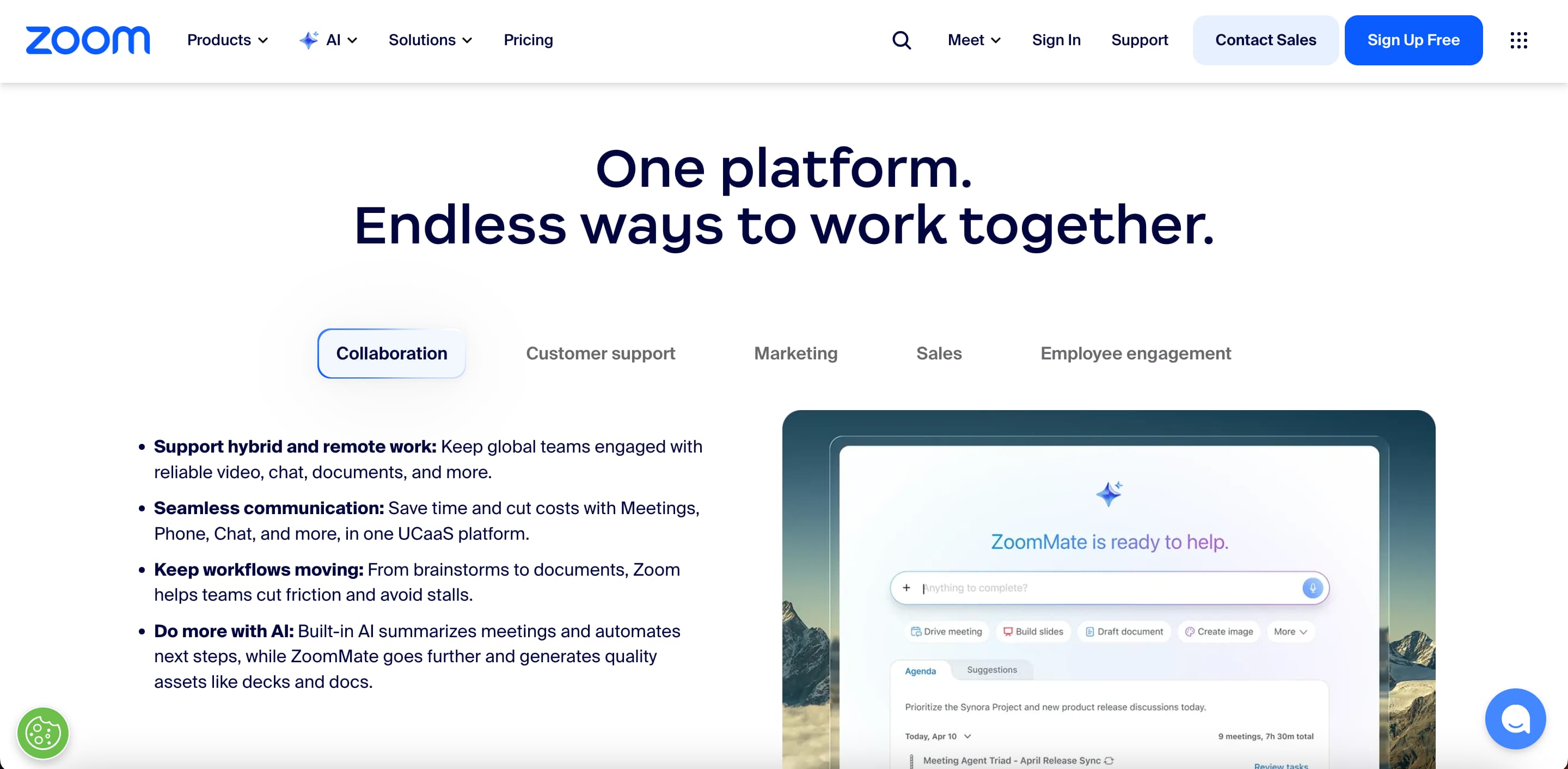
Zoom's strategic position is "One platform. Endless ways to work together." Simple, functional, clear. But their brand position goes one step further. Zoom made meetings feel human. That is why Zoom's marketing showed families connecting, teachers reaching students, and teams celebrating together rather than boardrooms and enterprise contracts. The "it just works" promise was the strategy. The warmth and accessibility were the brand layer built on top of it. That distinction matters. A competitor could copy the one-click join feature. They could not copy the feeling Zoom had already built in people's minds.
For Seed and Series For companies, brand positioning matters less than getting the strategy right first. Brand positioning amplifies a clear signal. It cannot create one from nothing.
What Are the Most Common SaaS Positioning Mistakes?
Mistake 1: Positioning to the feature, not the outcome.
Features are what your product does. Outcomes are what buyers get as a result. Buyers care about outcomes.
Most founders write about what their product does instead of what the buyer gets. "We use AI to analyse customer feedback" means nothing to a buyer. "Your support team stops answering the same question twice" means everything. "We automate your invoicing workflow" is a feature. "Get paid two weeks faster without chasing anyone" is an outcome.
Buyers do not care how your product works. They care what changes for them after they start using it.
Mistake 2: Using price as your positioning strategy.
Price is a signal of positioning, not a position by itself. If your main difference is being cheaper than the market leader, you are one pricing change away from losing that advantage entirely.
Mistake 3: Positioning for the investor pitch, not the buyer.
"The first vertical AI platform for mid-market professional services" sounds impressive in a pitch deck. It means nothing to a VP of Operations who just wants to reduce invoice processing time. Your positioning has to work in the buyer's language, not startup language.
Mistake 4: Repositioning too often.
Positioning takes time to settle in the market. Companies that reposition every six months because growth is slow often mistake slow adoption for wrong positioning. According to Gartner research on B2B buying behaviour, most enterprise buyers take 3 to 6 months to fully evaluate a vendor after their first impression. A positioning strategy needs at least 12 months of consistent execution before you can fairly judge whether it is working.
This is where We come in
Positioning is not a marketing problem. It is a business strategy problem.
The SaaS companies that get it right make deliberate positioning decisions early and hold them long enough to build market associations that competitors cannot copy. The process is not complicated. It requires honest data from your customers, a willingness to say no to buyers who are not a good fit, and the discipline to align every external communication around one clear strategic position.
If your homepage is live but the right buyers are not converting, the positioning is the problem. Minute Creative works with B2B SaaS founders at Seed and Series A to fix that. Ready to fix your positioning?

